Purpose & Strategic Importance
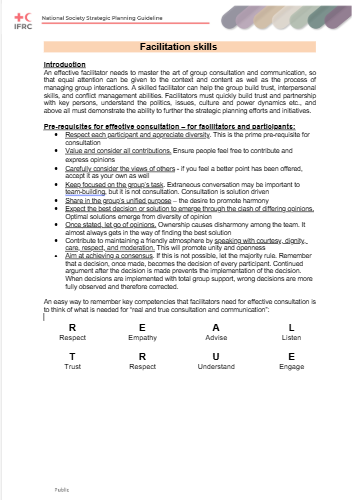
Bringing different stakeholder groups together can be very powerful. When well-managed, these conversations bring in diverse perspectives and often lead to creative thinking — whether focused on a specific challenge or opportunity, or reflecting more broadly on the National Society’s strengths and weaknesses.
Activities & Decisions
Facilitation methods
- Working groups – to explore specific options in detail.
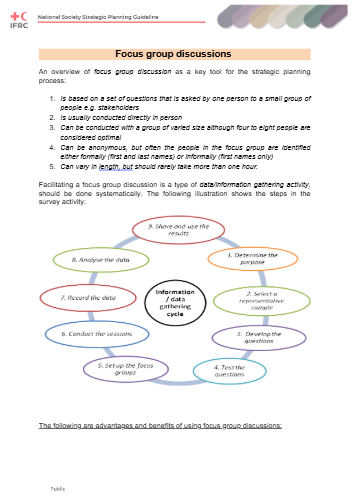
- Focus groups – to gather targeted insights on particular themes.
- Open formats – such as Open Space Technology, allowing wider participation and idea generation.
Implementation Notes
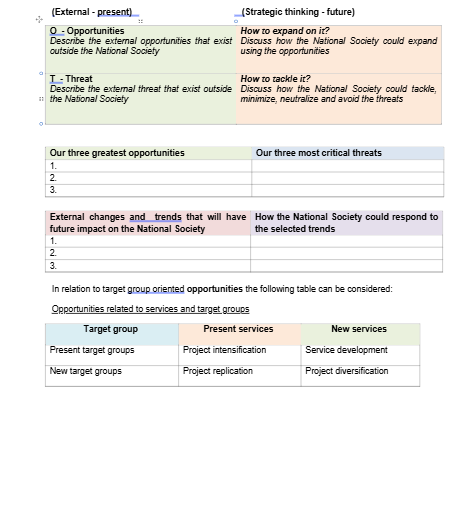
Looking for strengths as well as weaknesses
It is easy in discussions to focus only on what is not working. Especially when people come together, there is often a tendency to criticise and be negative. This dynamic can be made worse if one actor in the room — often a funder — is perceived to have more power than others, including the National Society.
While it is important to be realistic about weaknesses, it is equally important to highlight what is working well. A constructive approach to strategic planning is to build on existing strengths — investing further in what makes the National Society effective and unique compared to other humanitarian organisations.
Guidance & Learning Resources
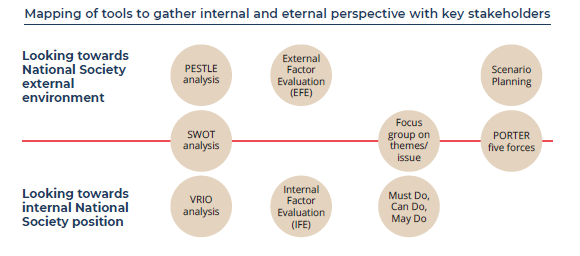
Visit the resource to see examples of various tools to engage different stakeholder groups.