Purpose & Strategic Importance
It’s necessary for a National Society to be able to tell whether it is making progress with its strategic plan.
Activities & Decisions
How to track progress
This means:
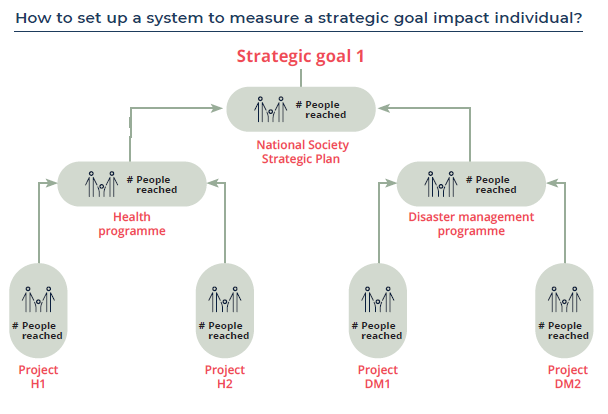
- Setting a few simple, key indicators to track results.
- Using data gathered during the strategic planning process as a baseline.
- Putting systems in place to collect relevant data for each priority area.
Many National Societies also conduct a mid-term review, where a small team — internal or external — reviews progress, identifies challenges, and makes recommendations for adjustments to both the strategic plan and how it is implemented.
Examples & Learning
Yemen Red Crescent Society
“We adopted a flexible approach to our strategy, acknowledging it would need to adapt to changing circumstances. Our original plan was ambitious, but a mid-term review helped us adjust to the new context. That flexibility has kept the strategy relevant and impactful.”
— Acting Executive Director, Yemen Red Crescent Society
Activities & Decisions
The role of the Governing Board
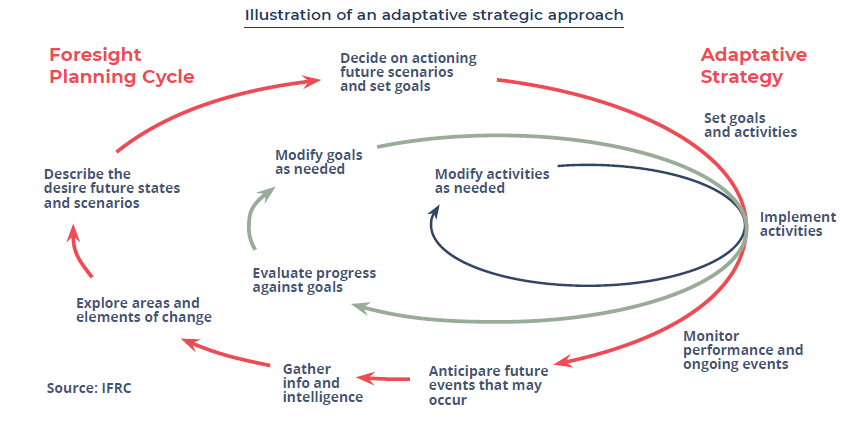
Adaptation is normal — especially when trying new approaches. The Governing Board should dedicate time each year to review progress and guide adjustments.
Key questions to consider:
- What has the National Society learned during implementation?
- Are there priorities that are no longer relevant?
- Are there priorities that are no longer achievable?
- Does the plan need to be adapted or replaced to fit a changing context?
Examples & Learning
Argentine Red Cross
“Once a year, we hold a dedicated meeting with the Governing Board to review strategic plan implementation and set operational priorities for the year ahead. We analyse changes in context, progress made, and available resources. The Board decides on any needed adjustments, even new lines of work if needed.”
— Undersecretary of Organisational Development, Argentine Red Cross
Implementation Notes
When to adapt the plan
Plans may need to shift if:
- Expected resources do not materialise.
- A crisis requires the National Society to refocus.
- Certain priorities no longer make sense or are achievable.
It is better to revise or replace a plan that no longer fits the context than to continue with one that lacks relevance or support from staff, volunteers, and partners.
Monitoring, adapting, and learning ensure that the strategic plan is not a fixed document but a living framework that guides the organisation through change.