Purpose & Strategic Importance
To make good strategic choices, National Society leaders need to ask good — and often difficult — questions.
These questions help the organisation look critically at itself, identify where it must change, and prepare for the future. Sometimes this is uncomfortable. It may mean recognising gaps in humanitarian response, or confronting deep-rooted internal challenges. But if these issues are not addressed, the strategic planning process will not succeed.
Core Concepts & Definitions
- Difficult strategic questions: Questions that challenge assumptions, surface gaps or tensions, and require honest reflection to inform meaningful strategic change.
Activities & Decisions
- Areas where difficult questions are needed
- Mandate and adherence to the Fundamental Principles
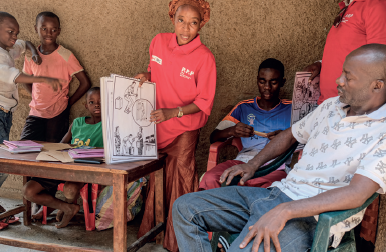
- Humanitarian positioning and geographical coverage
- National Society identity and image
- Governance and management structures, and overall internal coherence
- Management and administrative capacities
- Partnerships and key relationships
- Financial sustainability
- Effectiveness of services and overall humanitarian performance
- Inclusion and diversity within the National Society
- Mandate and adherence to the Fundamental Principles
It is recommended to develop a list of 5–10 key questions at the outset of the process. This list should be signed off by the Governing Board, to ensure legitimacy and ownership.
In some cases, data collection around sensitive themes may be led by a Governing Board member rather than by the coordination team.
Links with Related Capabilities
- Link to identity: Bringing the Fundamental Principles explicitly into these discussions reinforces the National Society’s identity and underlines its unique status compared to other humanitarian actors.
See also: "Using data wisely" and "Assessing organisational capacity"