
Purpose & Strategic Importance
Ownership is the single most important factor for a successful strategic planning process. Volunteers, members, and staff need to feel that the plan belongs to them if it is to be understood and implemented over time. This ownership starts at the top: leadership must inspire, convene, and actively encourage participation across the whole National Society.
When leadership shows visible commitment, the process gains credibility. Broad ownership increases motivation and makes implementation smoother. A plan without ownership risks being seen as a “paper exercise” and left unused.
Roles and Responsibilities
Leadership responsibilities include:
- Inspiring engagement – explaining why the plan matters and how everyone’s input counts.
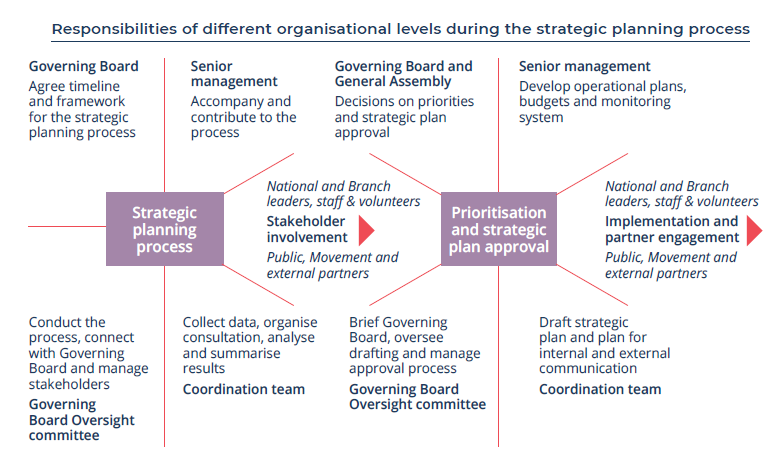
- Defining roles and responsibilities – clarifying what the Governing Board, senior management, coordination teams, and branches are expected to do.
- Agreeing timelines and frameworks – setting realistic boundaries for how long the process should take, and what is achievable.
- Providing oversight and encouragement – making sure feedback mechanisms are in place so people feel heard.
Implementation Notes
A first step
Leadership should establish a structure to lead and coordinate the process. This often means appointing a Coordination Team for day-to-day management, supported by a Governing Board oversight committee to ensure transparency and accountability.
“The commitment and presence of our leadership was key to underline the importance of the process and ensure participation from everyone.”
— Argentine Red Cross
See also: Coordinating Through a Dedicated Team and Overseeing with Governance Structures.