Engaging communities

Por naomi.akamatsu… ,

Purpose & Strategic Importance

Listening to communities is a key part of accountability. A strategic plan that is not based on an analysis of humanitarian risk and does not take into account the views of communities risks being irrelevant to the very people the National Society is meant to serve.

Activities & Decisions

What to understand from communities

  • Whether the National Society is trusted by communities.
  • If its services are seen as relevant and good quality.
  • Where there are unmet needs that the National Society – or others – should address.

Ideally, branches will already have an ongoing dialogue with local stakeholders. Where this does not exist, the National Society should create new opportunities to connect — especially with groups it may not usually engage.

Data collection methods

  • Interviews and focus groups.
  • Complementary use of national or local data on vulnerabilities.

Principles

Principles for engaging communities

  • Respect the dignity and experiences of individuals and communities.
  • Be aware of power dynamics and avoid putting anyone at risk.
  • Avoid creating false expectations that the National Society cannot fulfil.

Examples & Learning

Argentine Red Cross

“In our previous strategic planning process, community needs were reported through the branches. This time, we used a project to collect data directly from selected communities, in coordination with the branches. It helped us create a strategic plan that’s much closer to the realities on the ground.”
— National Coordinator of Management and Planning, Argentine Red Cross
No Personas enabling resources available.

No Gobernanza enabling resources available.

No Datos enabling resources available.

Submitted on

Finding ways to listen to communities is a crucial aspect of a National Society’s accountability to communities. Astrategic plan that is not built on an analysis of humanitarian risk and  does not take into account the views ofcommunity risks being irrelevant to the National Society’s ultimate constituency.​


In the ideal case, branches will have regular dialogues with local stakeholders. In other contexts, the National Society will need to identify ways to meet with communities. ​

In this context, several type of questions may be used based on what the National Society is looking for and thehigher questions the National Society is trying to answer. ​

It could be about several aspects such as:​

  • Assessing the humanitarian needs of the communities​

  • Capturing their perception on the quality of the services the National Society is providing to them​

  • Identifying their perception in terms of opportunities to participate and provide feedback​

  • Understanding their perception in terms of impact of those services​

image
C3_T07_Sample questions for communities
Submitted on

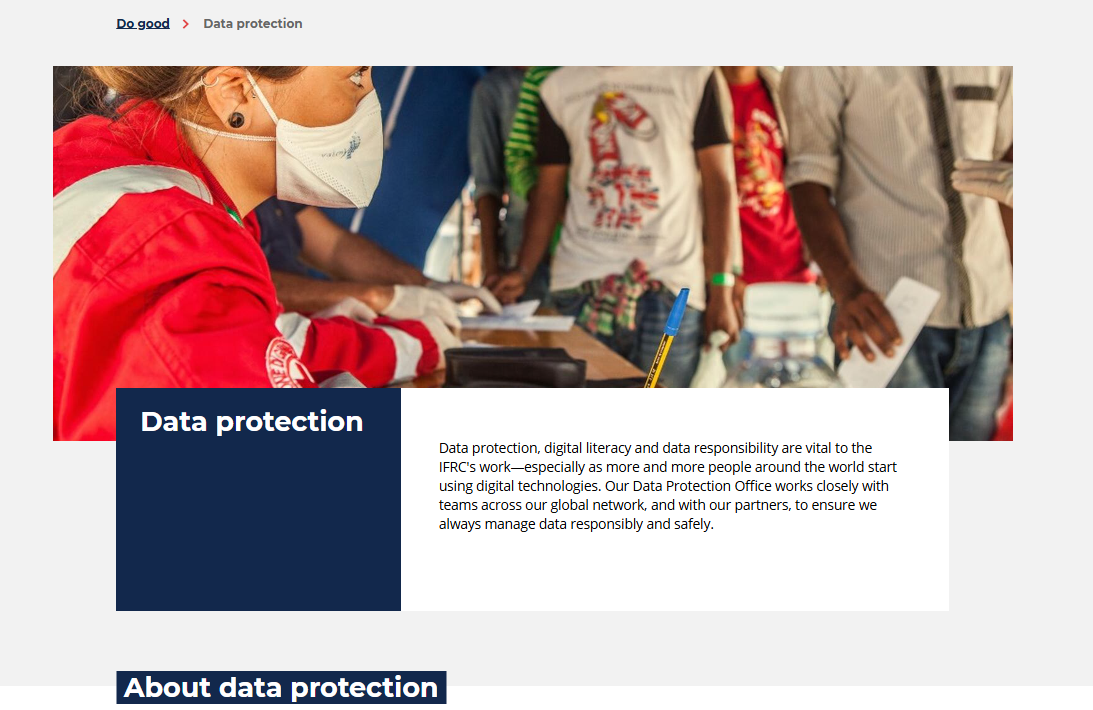
Data protection, digital literacy and data responsibility are vital to the IFRC's work—especially as more and more people around the world start using digital technologies. Our Data Protection Office works closely with teams across our global network, and with our partners, to ensure we always manage data responsibly and safely.

image
Data protection
Submitted on

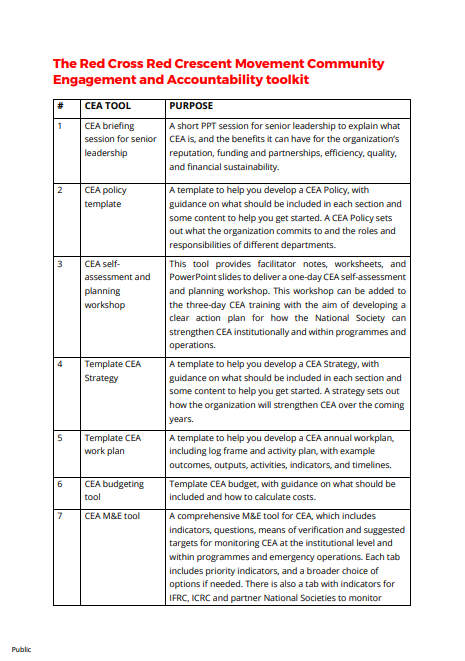
This toolkit contains tools that can help National Red Cross and Red Crescent Societies – as well as other organizations – to assess, design, implement, monitor and evaluate community engagement and accountability activities in support of programmes and operations. The toolkit should be used in conjunction with our Guide to Community Engagement and Accountability.

Scroll down to discover the full list of tools available.

image
Community Engagement and Accountability (CEA) Toolkit
Submitted on

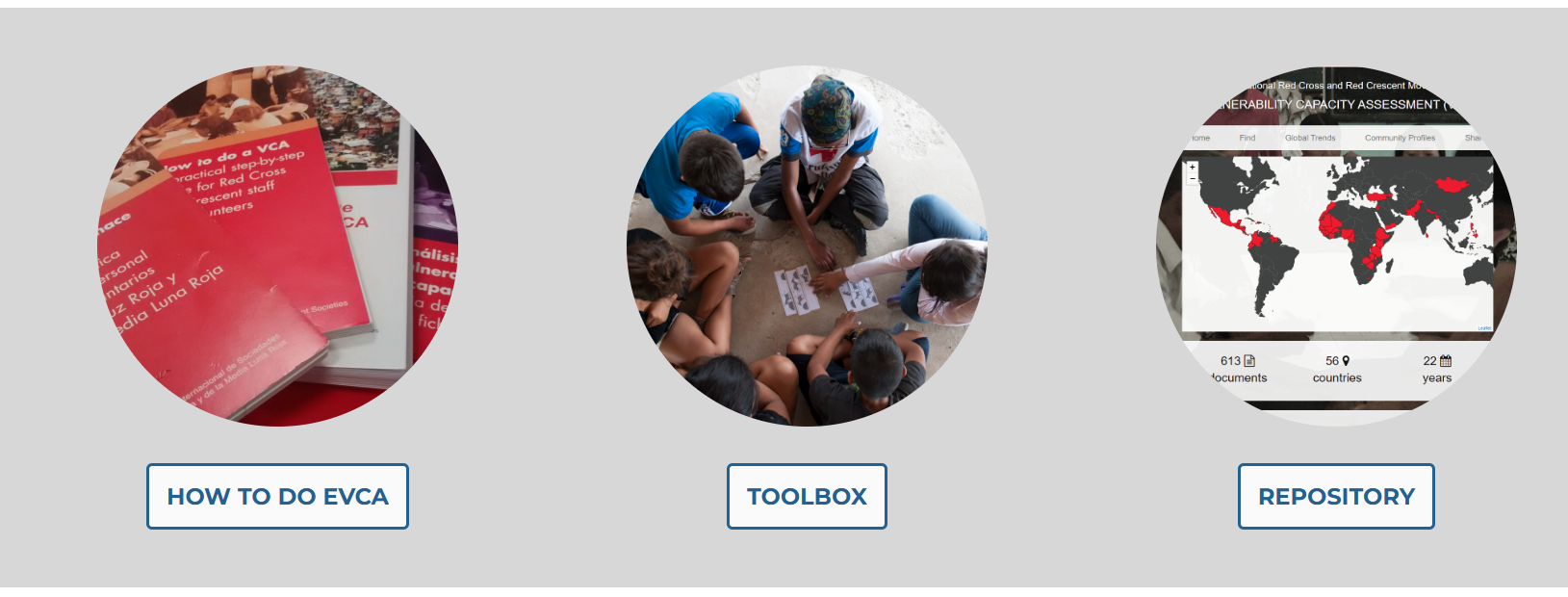
The Vulnerability and Capacity Assessment is a long-standing approach of the Red Cross and Red Crescent Movement better known by its acronym ‘VCA’. It is a participatory process developed for communities to become more resilient through the assessment and analysis of the risks they face and the identification of actions to reduce these risks.

EVCA stands for enhanced VCA. Improvements have been made based on an extensive review of the VCA guidance and toolkit and its application within the RCRC.

image
ENHANCED VULNERABILITY AND CAPACITY ASSESSMENT

No Instalaciones y Equipos enabling resources available.

No Guidance enabling resources available.

Join the Community of Practice

You need to be logged in to access community conversations.
Please log in o register to join the discussion and connect with other members.