Purpose & Strategic Importance
National Societies are bound by IFRC and Movement decisions and policies, so a strategic planning process is a good opportunity to identify areas where the National Society should better align with Movement strategies, norms, and agreements.
Guidance & Learning Resources
Visit here for IFRC policies and key commitments
Variations in Practice
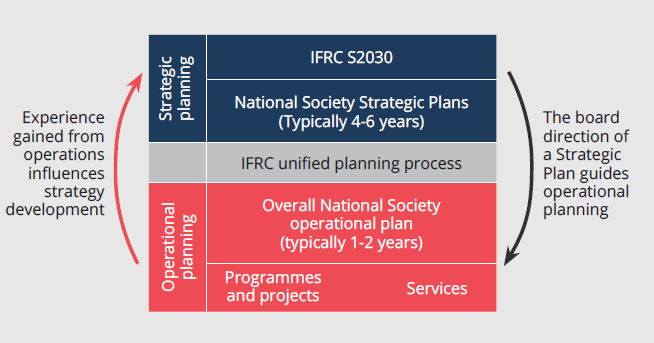
Relating IFRC Strategy 2030 to a National Society plan
IFRC Strategy 2030 presents a framework of:
- Three overall goals for the IFRC network
- Five global challenges facing all or most National Societies
- Seven transformations essential for responding to these challenges
Strategy 2030 is the culmination of the collective vision and priorities of the IFRC network. But each National Society must contextualise these elements and base its plan on its own humanitarian context, resources, capacities, and priorities.
Examples & Learning
Swedish Red Cross
“For Swedish Red Cross, IFRC Strategy 2030 was a useful inspiration to re-look at our work around Climate Change and how we were digitalising the National Society.”
— Organisational Developer, Swedish Red Cross