Purpose & Strategic Importance
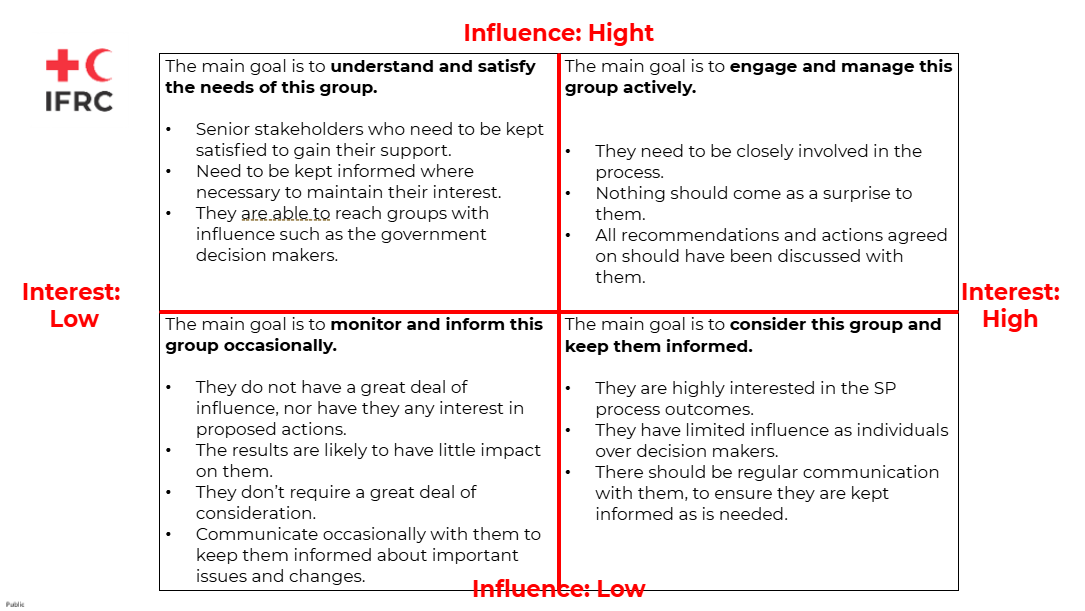
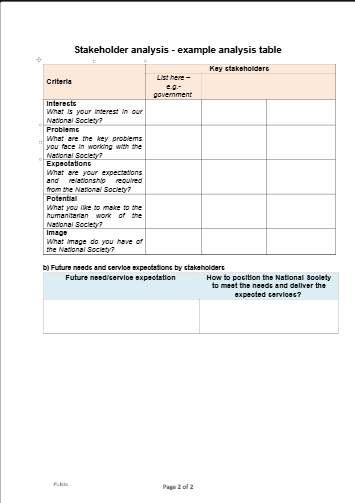
A National Society’s strategy must reflect the voices of the people it serves and the perspectives of those who contribute to its mission. Mapping stakeholders is therefore a critical step in the consultation and data gathering process. It helps decide who should be involved, how they should be consulted, and what role they will play.
Inputs
Key stakeholder groups
- Governance and senior management – provide leadership and take formal decisions on the strategy.
- Branches, volunteers, and members – bring local knowledge, community perspectives, and ownership.
- Communities – share their needs, experiences, and priorities as the ultimate users of the Society’s services.
- Public authorities – provide policy frameworks, guidance, and resources as part of the auxiliary role.
- Movement partners – offer support, perspectives, and comparative experience, but should respect National Society ownership.
- External partners – including NGOs, donors, and private sector actors, who can provide insights into humanitarian and development trends.
Activities & Decisions
Points to consider in mapping
- Which groups are essential to consult for legitimacy and accountability?
- At what level (national, branch, local) should consultation take place?
- What methods will be used — surveys, interviews, workshops, focus groups?
- How will the coordination team ensure balance so no group dominates the process?
Stakeholder mapping should be systematic and transparent, ensuring that diverse perspectives are included without overcomplicating the process.
Guidance & Learning Resources
Take a look at the resources for more ideas on how to do stakeholder mapping.